
Blog
Take a look at recent insights in leadership, strategy and more.

Demanding and accommodating
It's good to be accommodating. It helps make a reality of collaboration and getting a group of people working together. Sometimes though... We need to be demanding. Some roles involve directing an organisation on behalf of stakeholders of one kind and another. At...
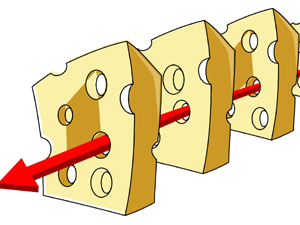
The Swiss cheese model of success
The Swiss cheese model is central to thinking about systemic failure. The idea is that each potential factor, which, when combined, could create a condition in which an accident could occur, is like a slice of a Swiss cheese with holes in it. All the factors are...

It’s not a question of whether you’re interested or not…
...it's a question of whether you need the knowledge. Sometimes we base our choice of what to learn about by what interests us, but actually to succeed in our goals, we need to learn about what's necessary, even if it isn't very interesting. Many worthwhile goals have...

Putting yourself out there to be judged
If we hope to have influence—to stimulate something better happening—we have to put ourselves out there to be judged. If we don't, nobody will know we have anything to offer and nothing different will happen. Of course, if we put ourselves and our ideas out there to...
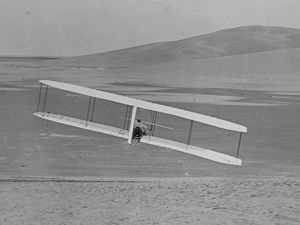
Is the status quo better funded?
Inertia is usually better resourced than change—better staffed, better financed, and better organised. It's usually easier to get paid to do something that reinforces the status quo than it is to do the radical work needed for an overhaul of the existing order. Much...
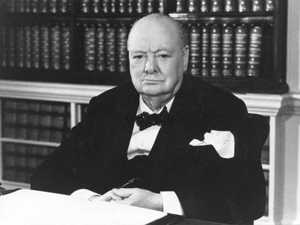
In making plans for work…
...it is sometimes necessary to take into account the actions of other people. It was a week of Winston Churchill quotes last week, though not, in fact, this one: "In making plans for war, it is sometimes necessary to take into account the actions of the enemy." So...
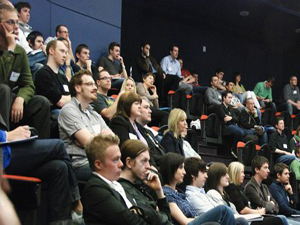
How do you tell if you are over-contributing?
It seems our fellow workshop participant thinks what she has to say is more important than the organised speaker's material. It's a smallish group admittedly, but the rest of us are there principally to hear what the workshop leader has to offer. Some contributions...

Why help is needed
W. Edwards Deming said "Help must come from outside because a system is not capable of understanding itself." In other words, it can be hard to see the wood for the trees. This is true whether we're talking about a single person or an organisation i.e. whether in...

Personality traits: self-reinforcing?
If we decide, for whatever reason, to be interested in detail rather than the big picture, for example, or possibilities rather than procedures, and we find that that (unconscious) choice works for us, then we're likely to do more of it—without really thinking,...

Standing for balance
Do “they” want to know what you stand for? Do they want you to be on one side or the other? Much easier for them to deal with you that way; clearer too, I suppose. But wrong, if you actually stand for balance. Hold your ground.

Not change but coercion
With sufficient power and authority, we can make something different happen. We can get an organisation to produce different results. We can make people comply. But that isn’t really change... It’s coercion. Not very sustainable, and also very hard work. Better to...

What if we don’t like the implications?
We may dismiss certain kinds of learning... Now it could be that the learning is plain wrong. Or... It could be that we don’t like the implications. One way, we’re right; the other, we’re making a mistake. Choosing not to see things systemically is a common example of...

The pull of the tribe
Have you noticed... Spend any time at all around a group of people, especially a large group of people or a big organisation, with at least some cohesion, genuine purpose, and shared values—in other words, a "tribe"—and the pull to associate with it is almost...

Total control—total paralysis?
We're addicted to control—control of our businesses, our public services, and our non-profits and charities. It seems so logical: The tighter we can nail down what happens in our organisations, the more efficient and reliable and predictable they will be. That could...
Evidence – Finding your own
We generally want evidence that something works, and our first thought is it's to be found "out there." What have other people done? There are sound enough reasons for looking at things this way, and it can be important for influencing stakeholders and their...